
PROJECT DETAILS
Study: 2025
Construction:
Plot Area: 85.40 sq.m.
House Area: 112.77 sq.m.
PROJECT CREDITS
Design Lead: Paly Architects (Nikos Lykoudis – Ismini Papaspiliopoulou)
Design Team: Filopoimin Lykoudis,Ioannis Tzouvelekas,Maro Skoumpa
Interior design: Paly architects
Lighting design: Paly architects
3D visualization: paly architects
PROJECT DESCRIPTION
HOUSE IN FRILIGKIANIKA
Friligkianika, Kythira
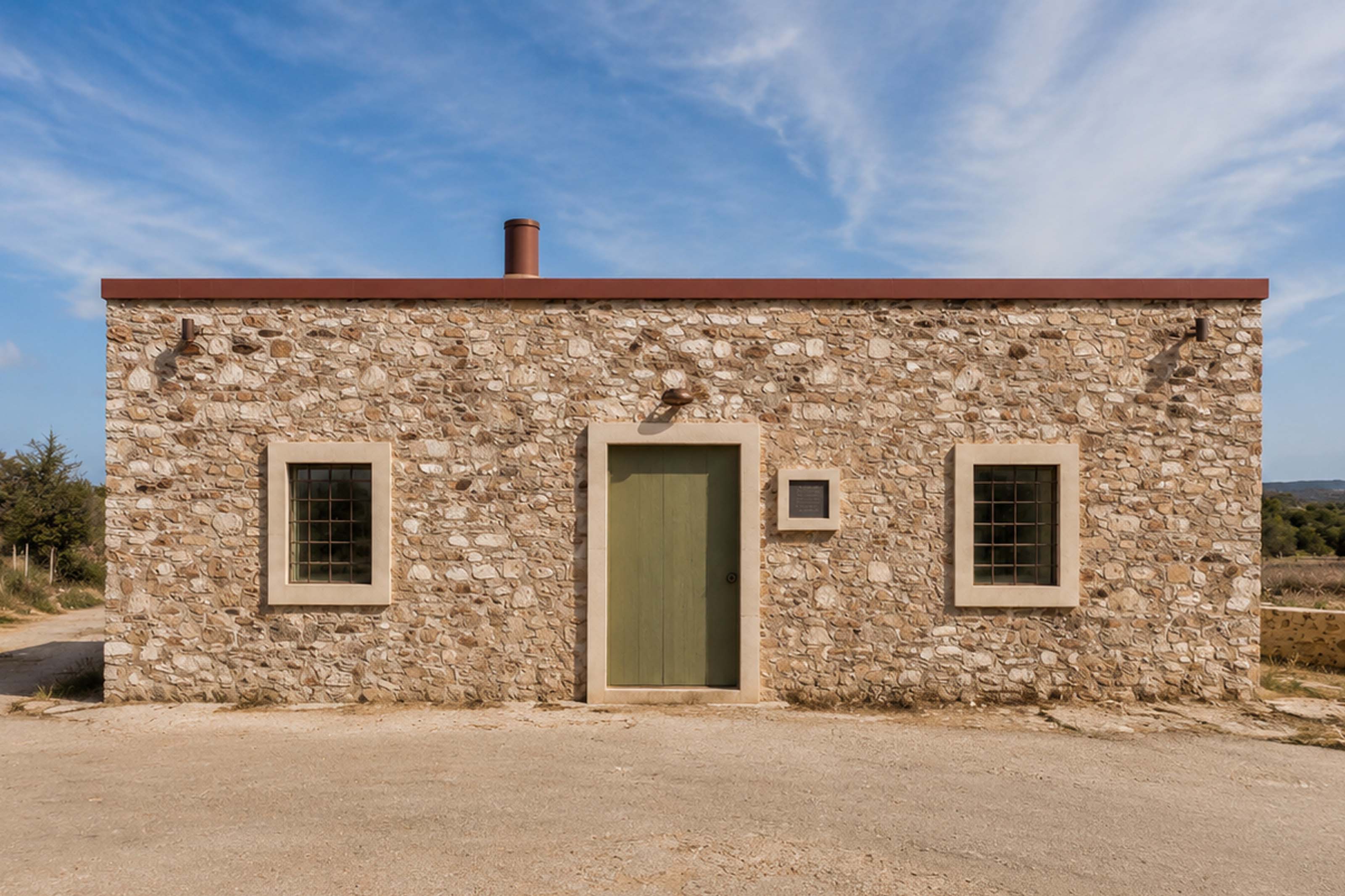
Located along the main road of Frigkilianika, a small village in Kythira, this modest stone building once served as the local kafeneio — a place of gathering and everyday social life. The project reimagines the building as a year-round residence while preserving its architectural character and cultural memory.
The design is rooted in the preservation and enhancement of the elements that define the building’s identity: its load-bearing stone masonry, the interior vaulted ceiling, and the various construction layers that reveal its evolution over time. Rather than concealing these traces, the intervention embraces them, allowing the building’s history to remain legible within its new use.
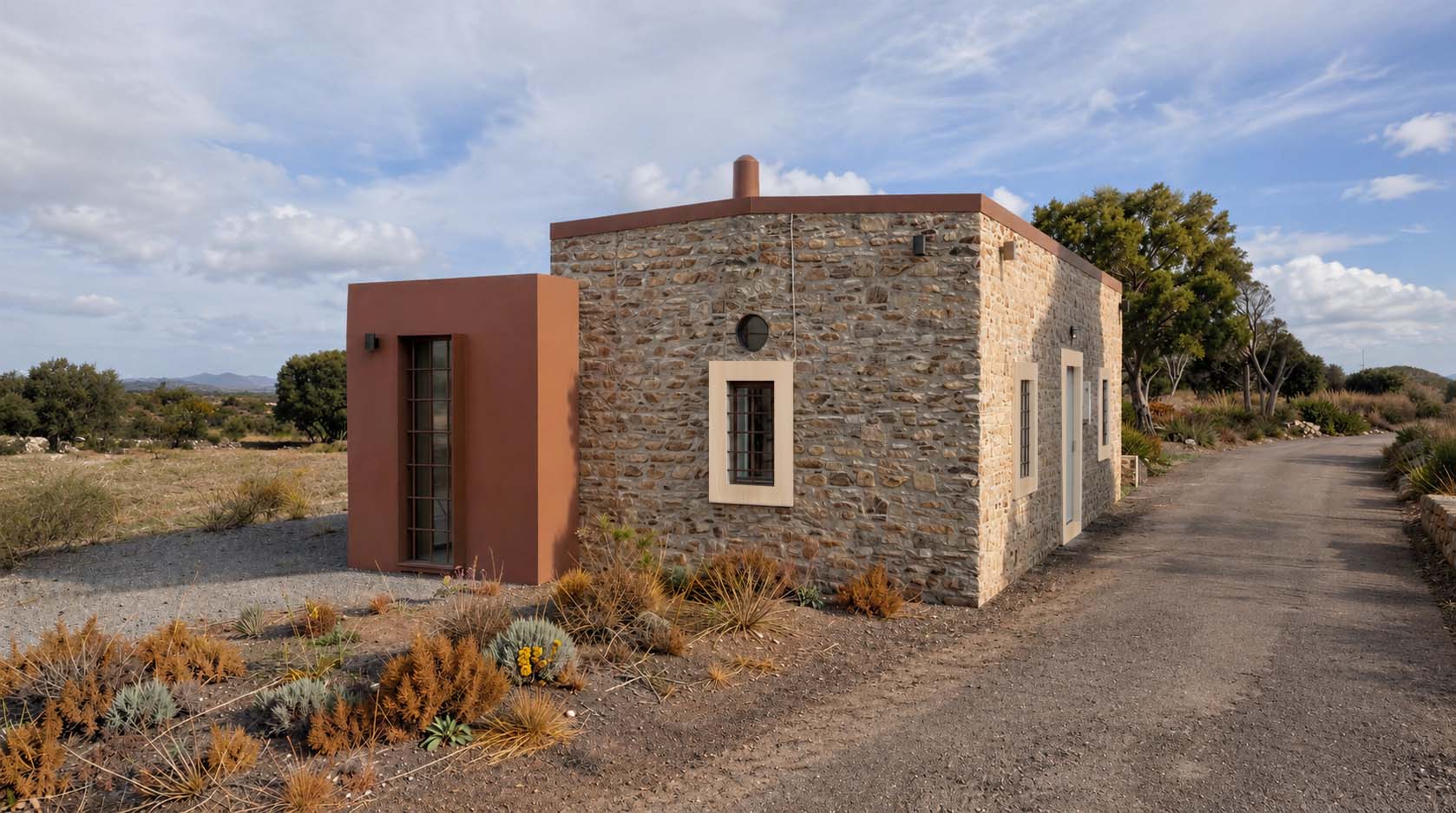
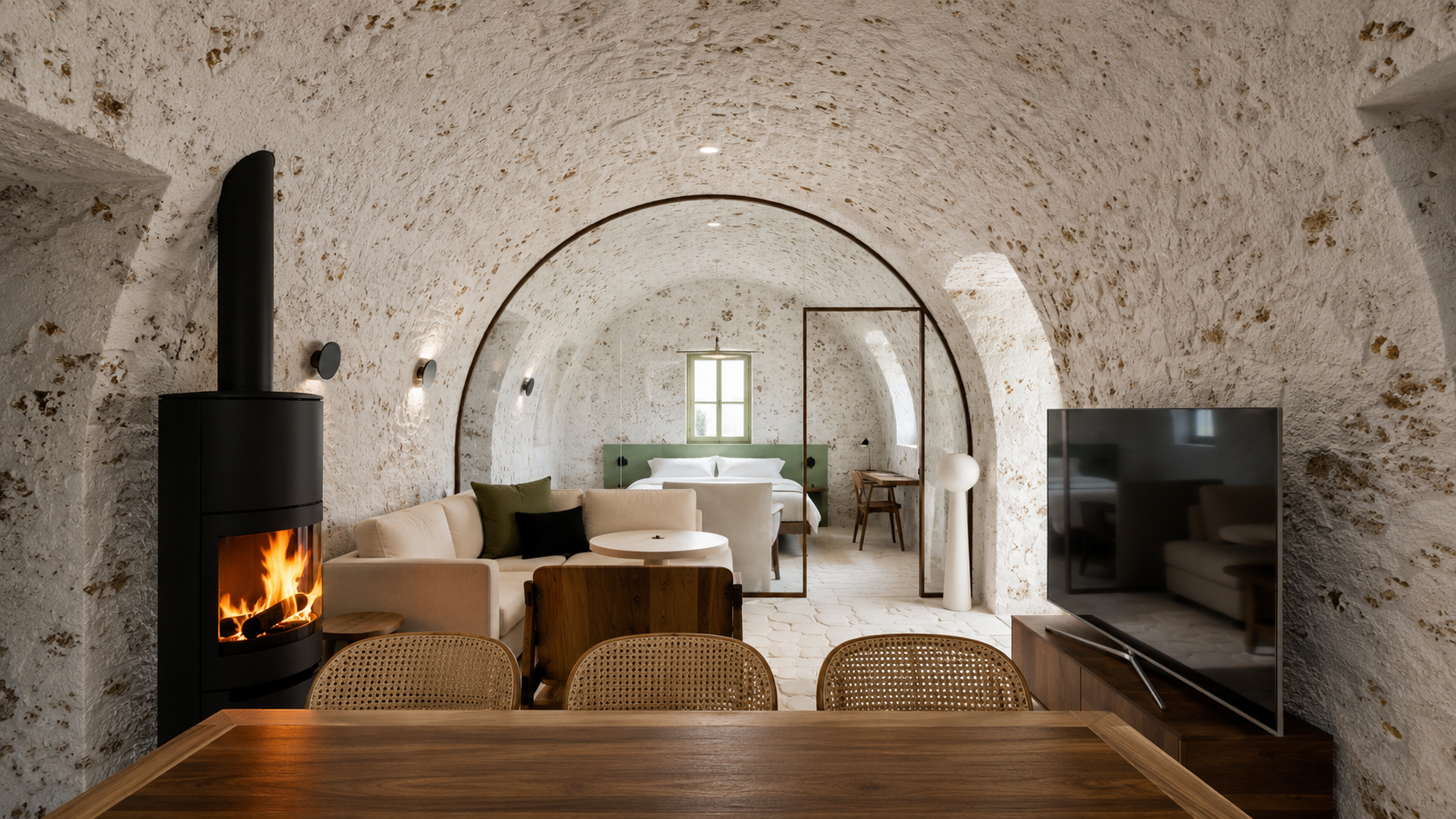
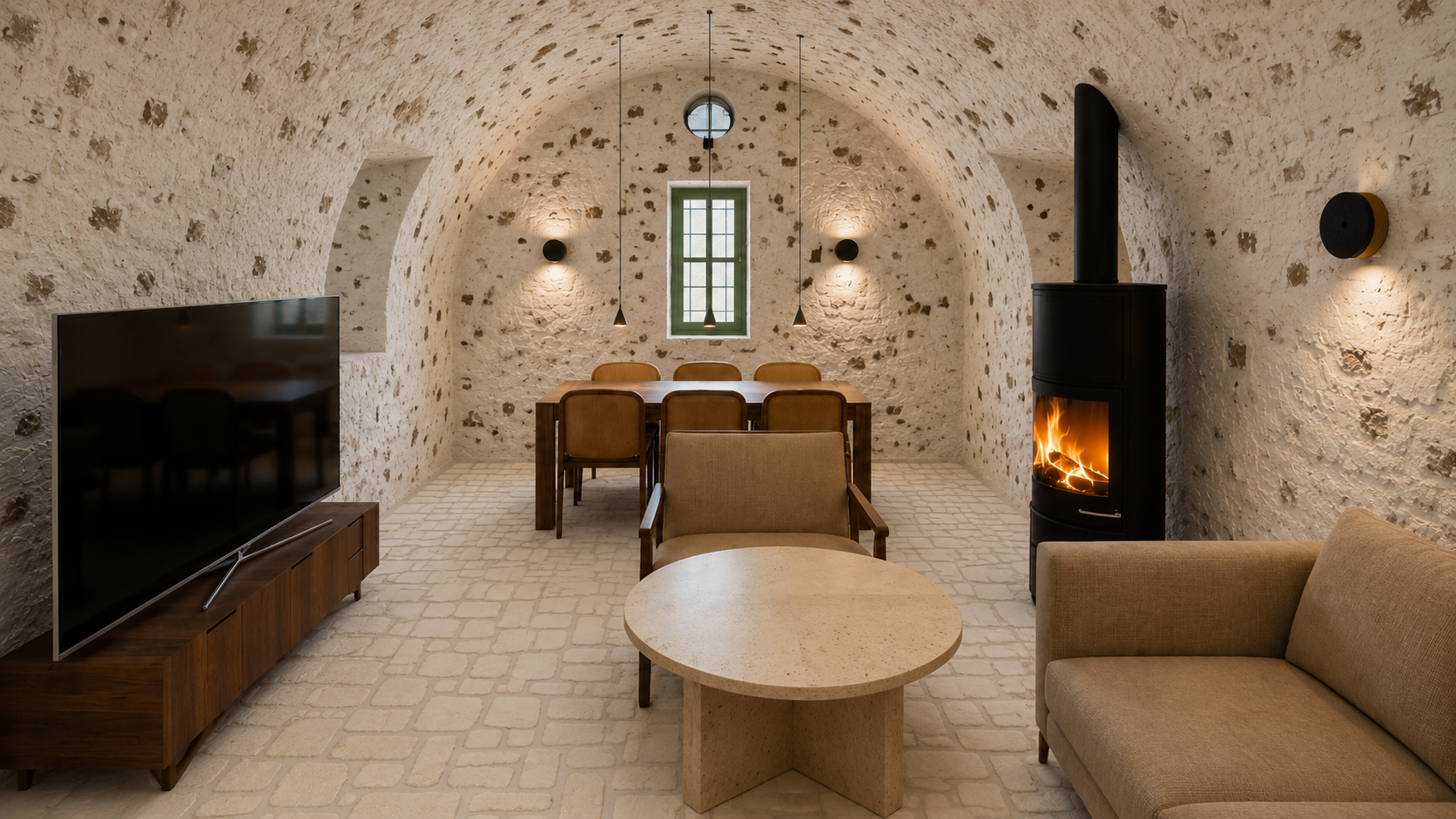
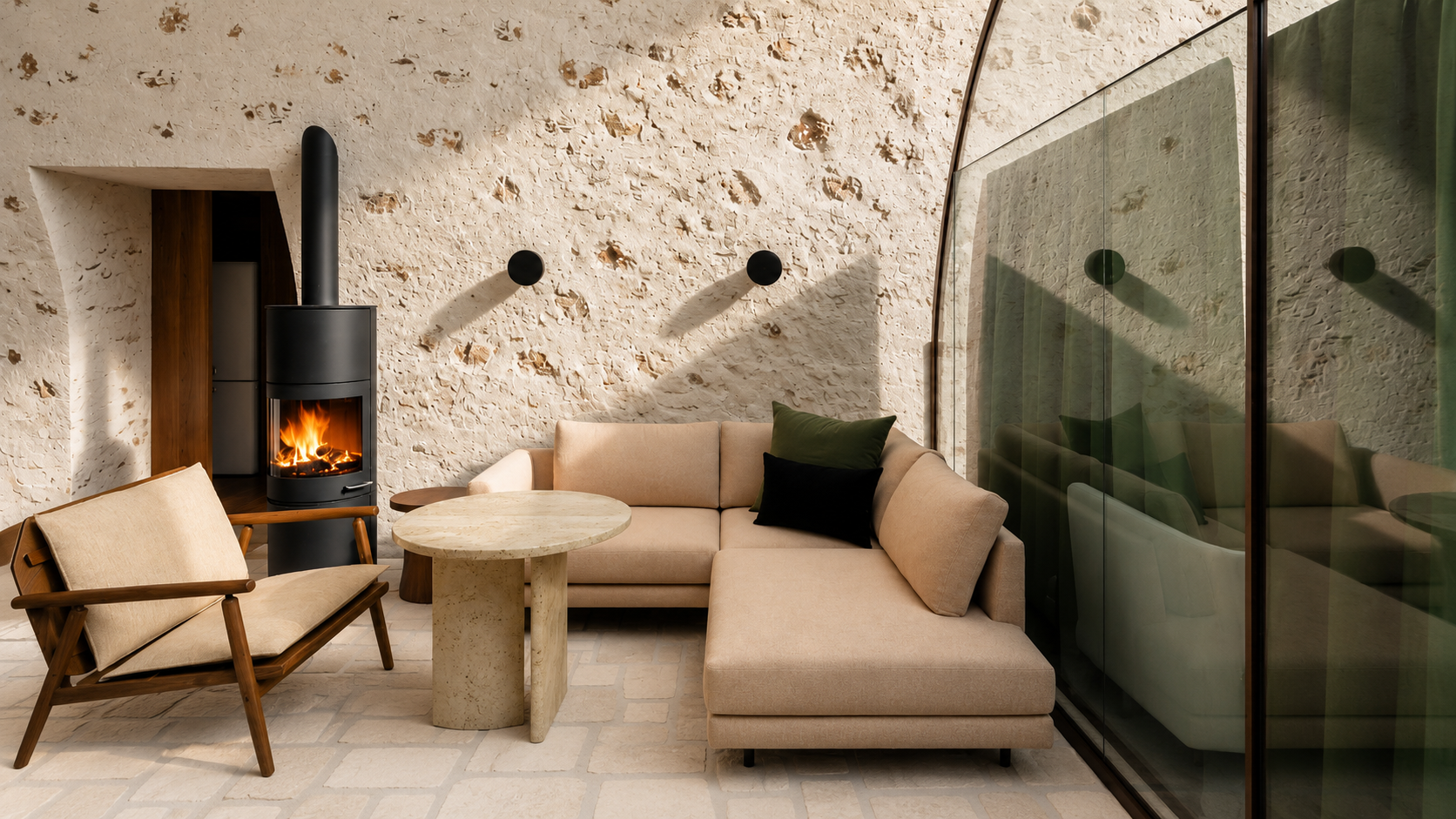
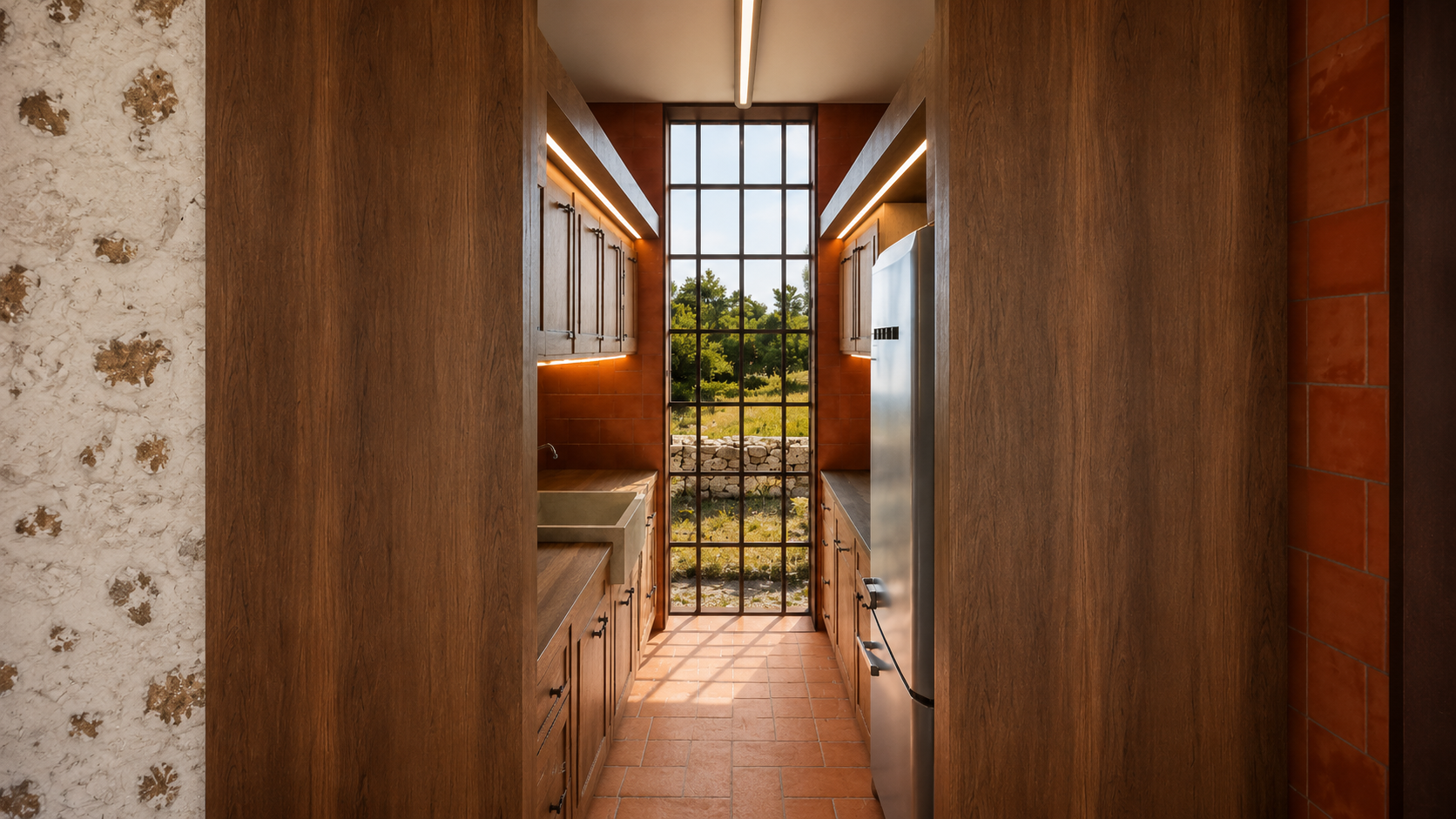
The house is organized around a single living space, where the living room, dining area, and wood-burning stove form the heart of daily life. The bedroom occupies a more private zone, separated by a lightweight glazed partition that maintains spatial continuity beneath the vaulted ceiling. The kitchen is located within the later addition, reinforcing the distinction between the original stone structure and the newer interventions.
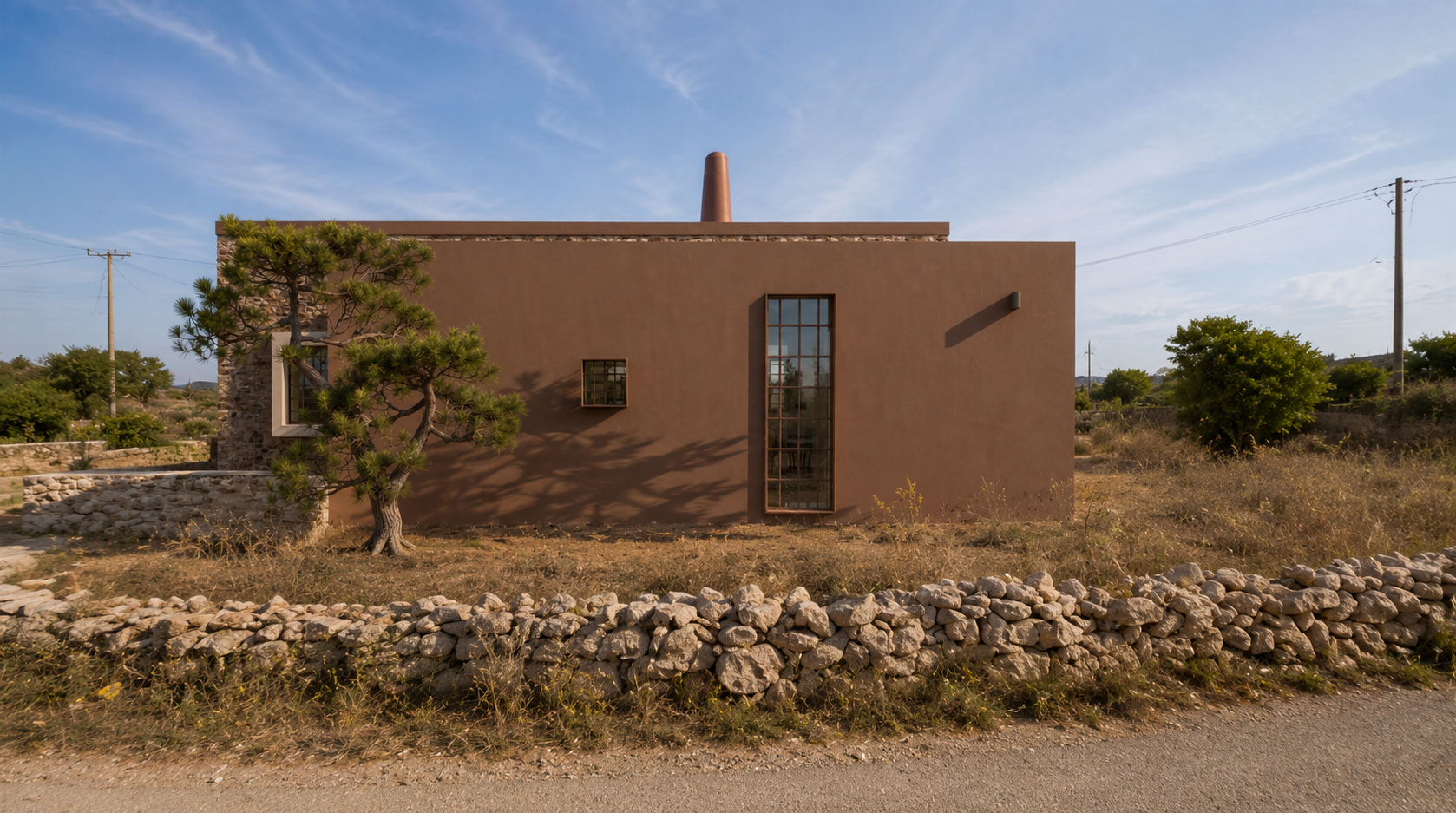
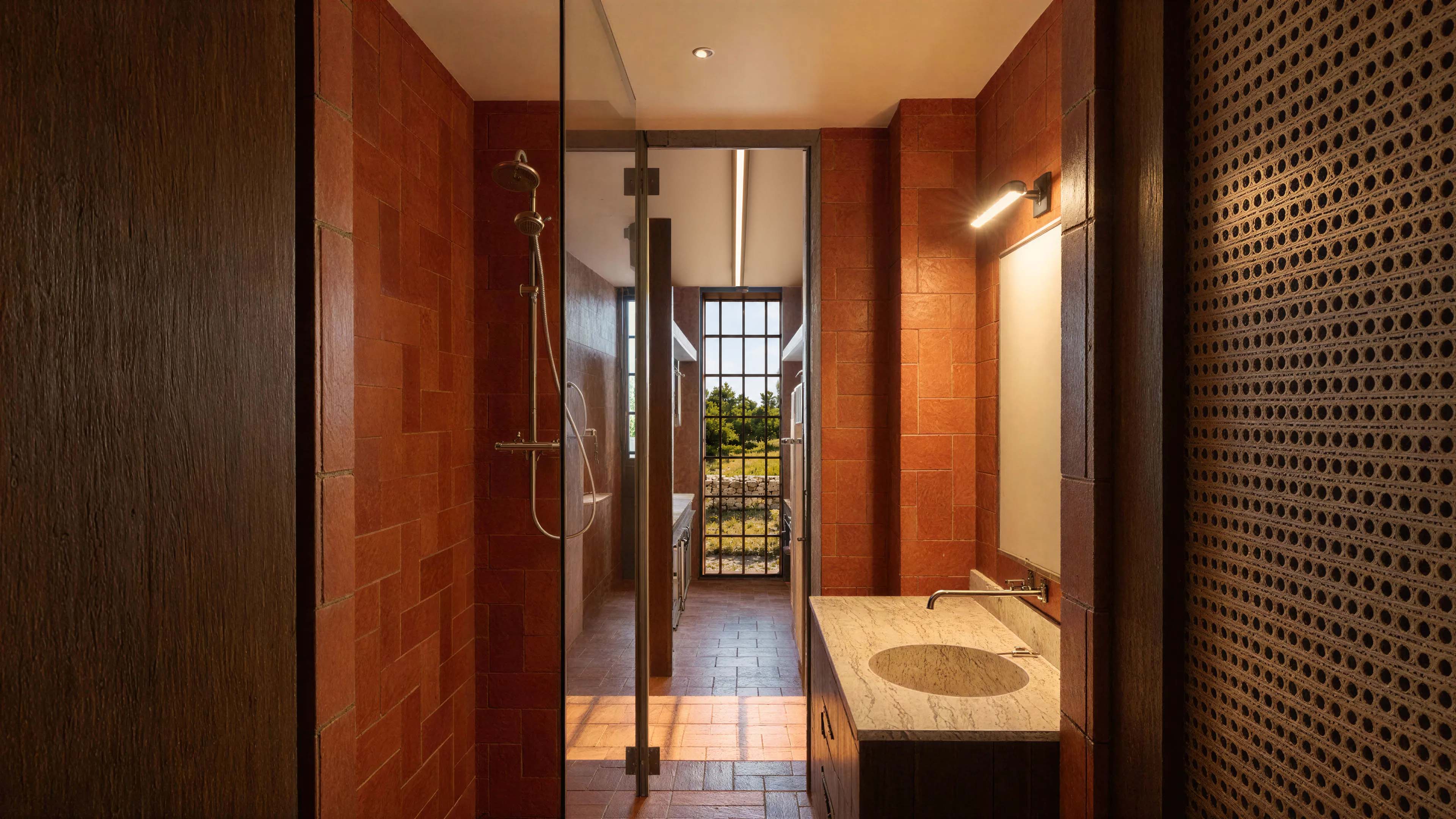
The project draws from the local architectural language of Kythira, not through direct replication of traditional forms, but through the continuation of a construction logic shaped by place and time. The stone masonry is carefully restored and revealed, while the existing concrete elements are repaired and finished in warm terracotta tones that recall the earthy palette found throughout the island’s built environment.
New openings are introduced to improve natural light and cross ventilation while maintaining the sense of solidity characteristic of the original structure. Metal frames with an oxidized finish emphasize the depth of the thick masonry walls and articulate the transition between interior and exterior. New ironwork reinterprets the traditional metal details of Kythira through a restrained contemporary language, while all metal elements are conceived as a coherent material family that complements the stone, timber, and terracotta surfaces.
Inside, the whitewashed masonry walls and vaulted ceiling are restored and celebrated as the defining spatial features of the house. Natural timber, terracotta, and metal details are introduced with restraint, creating a material palette that draws from the character of the island without resorting to imitation.
A former village kafeneio is transformed into a home, preserving the memory of the place while continuing its story through a new way of inhabiting it.
Study: 2025
Construction:
Plot Area: 85.40 sq.m.
House Area: 112.77 sq.m.
PROJECT CREDITS
Design Lead: Paly Architects (Nikos Lykoudis – Ismini Papaspiliopoulou)
Design Team: Filopoimin Lykoudis,Ioannis Tzouvelekas,Maro Skoumpa
Interior design: Paly architects
Lighting design: Paly architects
3D visualization: paly architects
PROJECT DESCRIPTION
HOUSE IN FRILIGKIANIKA
Friligkianika, Kythira
Located along the main road of Frigkilianika, a small village in Kythira, this modest stone building once served as the local kafeneio — a place of gathering and everyday social life. The project reimagines the building as a year-round residence while preserving its architectural character and cultural memory.
The design is rooted in the preservation and enhancement of the elements that define the building’s identity: its load-bearing stone masonry, the interior vaulted ceiling, and the various construction layers that reveal its evolution over time. Rather than concealing these traces, the intervention embraces them, allowing the building’s history to remain legible within its new use.
The house is organized around a single living space, where the living room, dining area, and wood-burning stove form the heart of daily life. The bedroom occupies a more private zone, separated by a lightweight glazed partition that maintains spatial continuity beneath the vaulted ceiling. The kitchen is located within the later addition, reinforcing the distinction between the original stone structure and the newer interventions.
The project draws from the local architectural language of Kythira, not through direct replication of traditional forms, but through the continuation of a construction logic shaped by place and time. The stone masonry is carefully restored and revealed, while the existing concrete elements are repaired and finished in warm terracotta tones that recall the earthy palette found throughout the island’s built environment.
New openings are introduced to improve natural light and cross ventilation while maintaining the sense of solidity characteristic of the original structure. Metal frames with an oxidized finish emphasize the depth of the thick masonry walls and articulate the transition between interior and exterior. New ironwork reinterprets the traditional metal details of Kythira through a restrained contemporary language, while all metal elements are conceived as a coherent material family that complements the stone, timber, and terracotta surfaces.
Inside, the whitewashed masonry walls and vaulted ceiling are restored and celebrated as the defining spatial features of the house. Natural timber, terracotta, and metal details are introduced with restraint, creating a material palette that draws from the character of the island without resorting to imitation.
A former village kafeneio is transformed into a home, preserving the memory of the place while continuing its story through a new way of inhabiting it.